
What Makes Holbein Watercolor Special?
Nana SunSqueezing tube paint pan by pan into an empty palette — Holbein dries flat and rewets fast, born for building your own travel palette.
Friends often ask me: with so many watercolor brands out there — Winsor & Newton, Schmincke, Daniel Smith — what is so special about Holbein? Is it worth buying?
The short answer: Holbein is not the loudest brand, but it is the kind people stay with once they try it. Its character can be summed up in three words — clean, bright, and controllable. This post covers where it comes from and its five defining traits, and honestly, what it is not good at, so you can judge whether it fits you.
Holbein is an art materials brand from Osaka, Japan. The company was founded in 1900, and its artists' transparent watercolor was launched in the early 1920s — a hundred years of history, now 108 colors. It follows the European transparent watercolor tradition while keeping the Japanese attention to brushwork — and that background explains almost everything about its character.
1. Clean, bright color that stays clean in mixtures
What Holbein is most praised for is the purity of its color. The paint is ground extremely fine and highly concentrated, so a little goes a long way: the tip of the brush picks up just a touch, and it spreads across a large wash. Laid thin, it is a clear, bright color; layered, it builds clean, powerful darks, without going gray or dull.
That cleanliness shows most in mixing. Many watercolors turn gray and muddy when two colors meet; Holbein's mixtures stay relatively transparent, and the intermediate colors keep their light. For people who paint flowers, plants, and fresh-style illustration, this is especially appealing — pink stays pink, green stays green, with no constant brush-washing rescue missions.
2. No ox gall: it flows slowly, so it is exceptionally controllable
This is the real root of the handling difference between Holbein and Western brands. Many Western watercolors add ox gall and other dispersants to make paint run faster and more actively on wet paper; Holbein adds no ox gall, no animal by-products, and no other dispersants — gum arabic is the only binder.
The result: paint spreads a beat slower on paper. In wet-in-wet work, color does not bolt away out of control the moment it lands; it stays more obediently near where you want it, and brushstroke edges hold. People who love detail, illustration, and fine blending often fall for exactly this control. On the other hand, if what you want is paint running free across wet paper and exploding into big blooms, it can feel a little "too well-behaved."
3. Rewets fast: dried in the pan, it doesn't crack, crumble, or mold
Squeezed from the tube and left to dry, Holbein has a smooth, even, creamy texture; the dried surface stays flat and does not readily crack, flake, or grow mold. Touch it with a wet brush and it dissolves again quickly — close to ready-made pan watercolor.
That is also why it has long sold only tubes and encourages painters to build their own palettes: squeeze your favorite colors into empty wells, let them dry, and you have a palette customized entirely to your habits. It is especially handy for travel sketching — no settling for a manufacturer's preset colors; one small metal tin holds the dozen or so colors you reach for most, and goes wherever you paint.
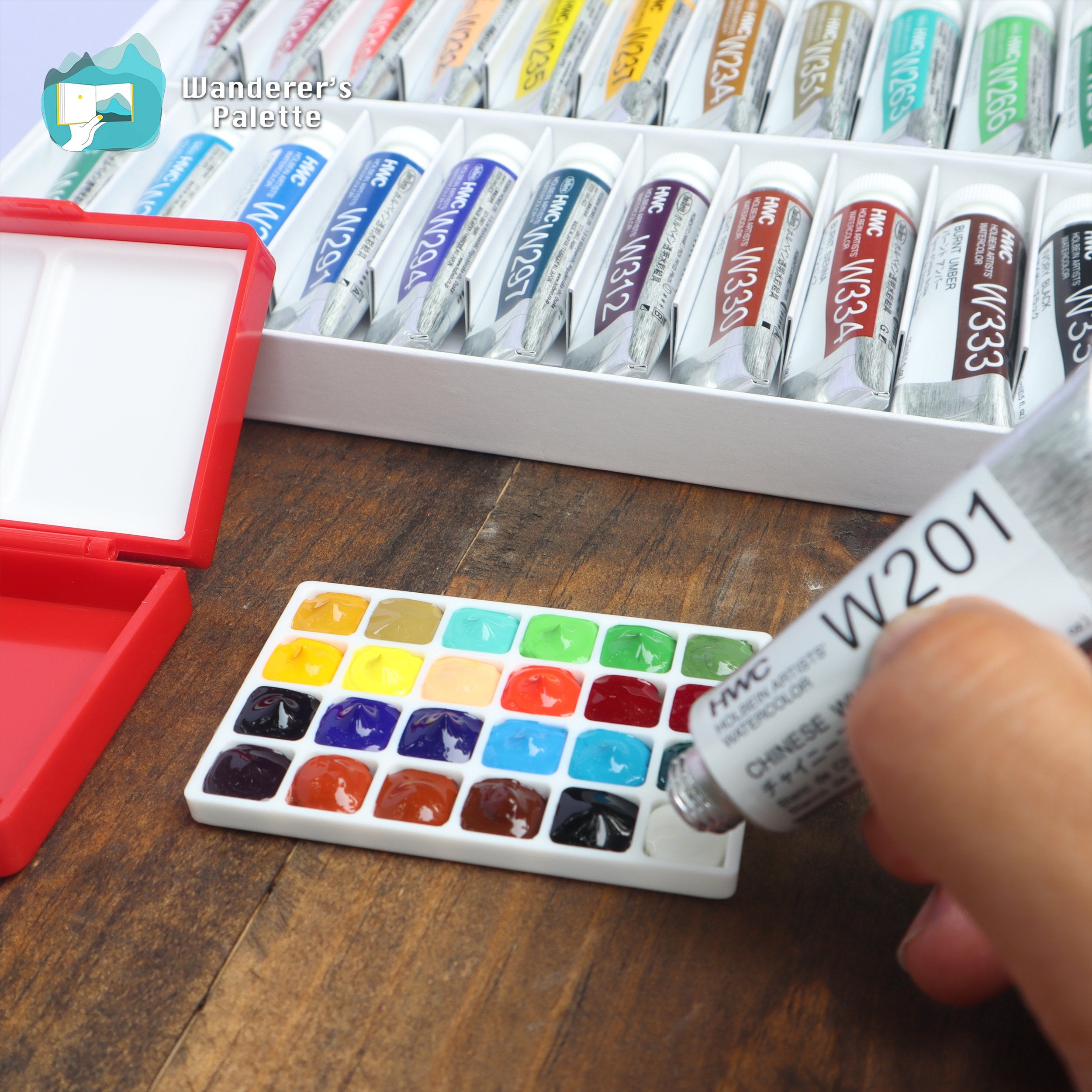
Filling a travel palette by hand with Holbein tubes.
4. A vivid color chart: lots of bright colors, and even the earth tones carry a bright undertone
Open the 108-color chart and the first impression is "bright." There are plenty of high-chroma pinks and blue-greens; the flower greens, pinks, and tender greens used for botanical work are all there; even the usually sober earth colors often carry a bright golden or red undertone, so they feel less "muddy."
Its signature color is Opera — a near-fluorescent bright pink; many flower painters fell for the brand because of this one tube. Other brands later launched colors under the same name, which says something about its influence. It also has a few notable lines: the fluorescent-feeling Luminous series, and the more recent Granulating series, which produces sediment texture and fills the gap long-time users missed most.
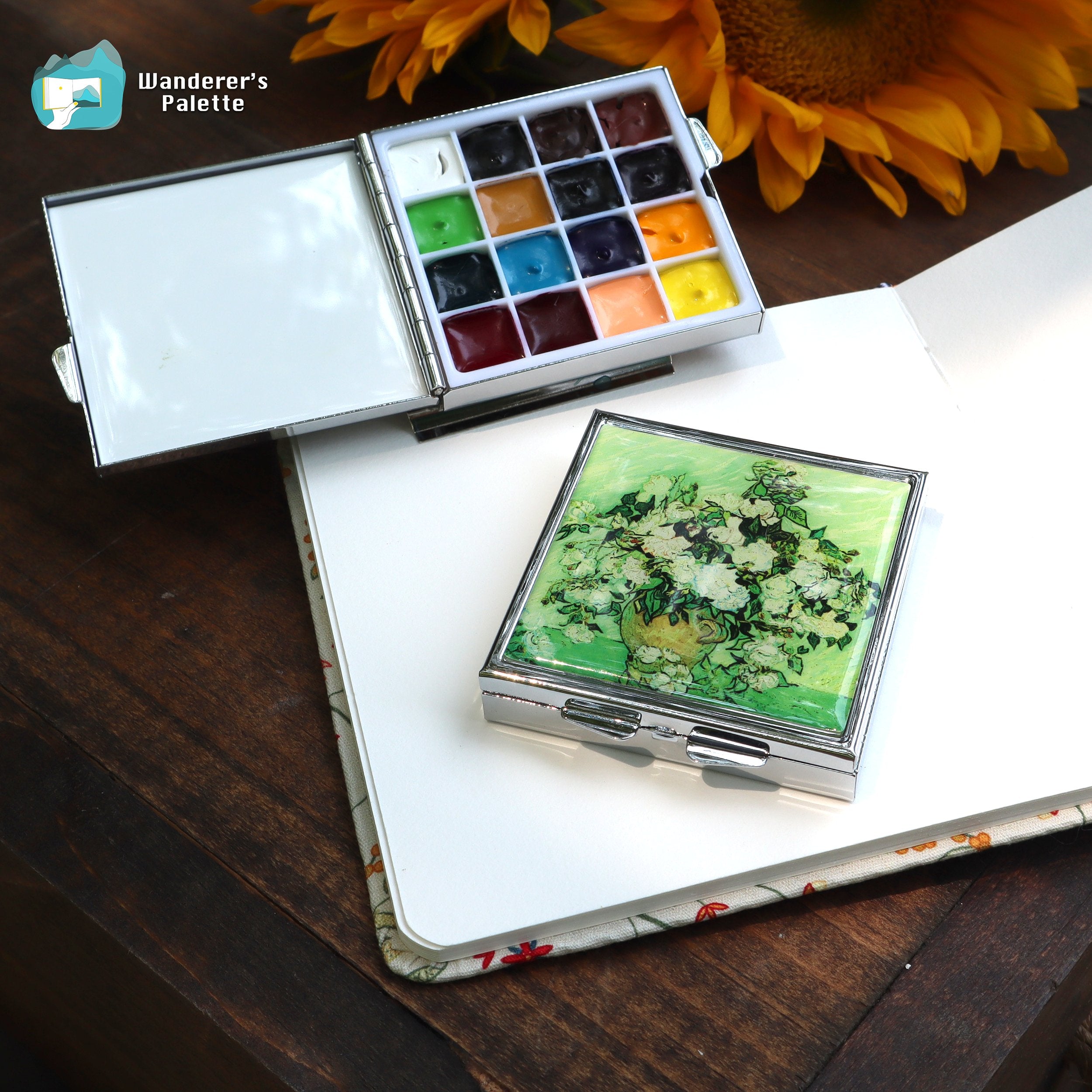
A filled travel palette, ready to paint anywhere.
5. Honestly: what it is not good at
Every brand has its trade-offs, and here are Holbein's, up front.
First, the classic range is known for even, smooth color; natural granulating colors are few, and granulation is weaker than Daniel Smith and Schmincke. If you love rough mineral texture and strong sediment separation, it may feel too quiet — though you can add a few tubes from the Granulating series.
Second, watch lightfastness on a few star colors. Opera and the Luminous fluorescent range are stunning but rated lower for lightfastness; prolonged light exposure can fade them. Fine for journals, practice, and print originals; for framed work meant for sale or long-term keeping, check each tube's lightfastness rating or substitute a more lightfast color. The vast majority of regular colors are reliable for lightfastness — no need to throw the baby out with the bathwater.
6. Holbein at a glance
| Trait | What it does | Good for |
|---|---|---|
| Color | High purity, bright and transparent, mixtures stay clean | Flowers, plants, fresh-style illustration |
| Flow | Spreads a little slower, brushstrokes stay controllable | Detail work, fine blending |
| Rewetting | Dries smooth, a wet brush dissolves it at once | Self-filled palettes, travel sketching |
| Granulation | Weaker in the classic range; a Granulating series exists | Those who want strong texture need a few extra tubes |
| Lightfastness | Most colors reliable; fluorescent colors need care | Check ratings tube by tube for formal work |
| Sizes | Tubes in 5 ml / 15 ml, 108 colors | Start with a small set, then add single tubes |
7. Who is it for? How to buy your first set
If any of these sound like you, Holbein will probably suit you: you like clean, bright pictures; you often paint flowers, plants, food, and small travel scenes; you paint illustration or journals and need colors that behave and don't run wild; or you want to build your own travel palette to carry out sketching.
No need to buy everything at once. Tubes come in 5 ml and 15 ml; beginners can start with a 12-, 18-, or 24-color 5 ml set — enough to practice and learn its temperament; once it feels right, add single large tubes for the subjects you paint most. When I fill my own travel palette, Holbein is still what I reach for — because it stays stable dried in the wells, rewets fast, and travels without worry.
One last thought for anyone still deciding: there is no best watercolor brand, only the character that fits your hand best. Holbein's character is handing control back to the person painting. Every stroke you make, it doesn't steal the show — which is probably why it is still on the shelves after a hundred years.
— The end —
Have you tried Holbein? Which color is your favorite? Tell me in the comments.
Sources: Holbein official product pages (Artists' Watercolor); Jerry's Artarama and Jackson's Art product descriptions. Photos in this post are real photos of hand-filling a travel palette.


